
Best TV of 2024
Sometimes it feels as if the only way to write about television is to write about business. As Peak TV recedes further and further into our rearview mirror, the conversation around the medium has increasingly focused on the way that the streaming TV model—and its Wall Street backers—have warped both the business and artistry of making TV shows. In the last year alone, we’ve talked about how Netflix has made early and premature cancellation an integral component of its business model. How Warner Bros. Discovery has been steadily hollowing out the once-storied HBO brand and filling it with Harry Potter. How streamers keep pumping out franchise tie-ins hoping to cash in on the success of movies like Dune and The Batman, which only end up feeling like homework. Just this week a major expose on Netflix’s business practices has got all my feed tittering about explicit instructions to screenwriters to write dialogue that anticipates an audience that has at least one eye on another activity.
All of this reportage is accurate and important, but to me it all feels like it’s circling around a single issue: timing. If I had to sum up the one thing that is consistently wrong with the majority of TV at the moment, the one way in which poisonous, short-sighted business practices are tearing down the accomplishments of the golden age of television, it would all come down to a poor understanding of timing. In 2024, and for some time before that, we were awash with examples how poor timing ruins what might have been a good, effective story. We’ve had shows that should have been a movie stretched out into six, eight, even ten hours. Shows that actually were a movie, twenty-five or thirty years ago, now compelled to come up with extraneous subplots and unnecessary complications to justify a format their story can’t sustain. Shows whose approach to this problem is merely to stall, taking an hour or more to reach what was once a perfect movie’s first act break. Shows that could have been a perfect network series, happily churning out twenty episodes a year, now reduced to eight or six. Shows that take a whole season to get to where their story should have started. Shows whose creators were informed, halfway into production, that they must cram several seasons’ worth of story into a handful of episodes. Shows that stretch out what should have been a 45-minute episode to something longer than an hour. Shows with no sense of what an episode is at all, that merely chop up a single narrative into a certain number of chapter. Shows returning after two or three years’ absence, fully expecting us to still remember—and be emotionally invested in—the events of their continuing story.
If there’s one trait common to all the shows I’m going to talk about in this post, it is that they have managed to buck this trend. These are shows whose creators are aware of the importance of timing in television storytelling. Shows whose episodes are their own units, capable of impacting the viewer in their own right, rather than just part of a whole. Show that respect the viewer’s time; that demand our attention and then reward us for giving it. Which is not, of course, to say that these shows exist separately from the business considerations that are currently shaping (in many cases, misshaping) TV. Two of them have already been cancelled. One is coming back for a second season, in what feels like an ill-considered, business-forward decision. One is a retelling of a popular movie. When it comes to the expensive, technically challenging business of making television, it’s never truly possible for art to rise above the economic landscape from which it emerges. But for whatever reason—talent, luck, sheer bloody-minded stubbornness—the artists who made these shows were able to hold their own just enough to make something special. Now more than ever, that feels worth celebrating.
Best Show of 2024: Shōgun (FX) and Interview With the Vampire (AMC)
For more than a decade, the entire TV field has been trying to make another Game of Thrones. This has translated into a myriad competing fantasy doorstopper adaptations, and a growing number of Game of Thrones spin-offs, none of which have managed to replicate that zeitgeist-capturing series’s magic. Now along comes a show with a truly questionable elevator pitch—a second adaptation of a dubiously-factual, blatantly orientalist novel that nobody reads anymore?—and reminds us that what made Game of Thrones a phenomenon wasn’t the magic or the dragons. It was the conversations. It was scene after scene of people with strong, interesting personalities lobbing loaded statements at one another, trading glances heavy with significance, playing chess with words, with war, conquest, and annihilation as the unspoken but ever-present stakes.
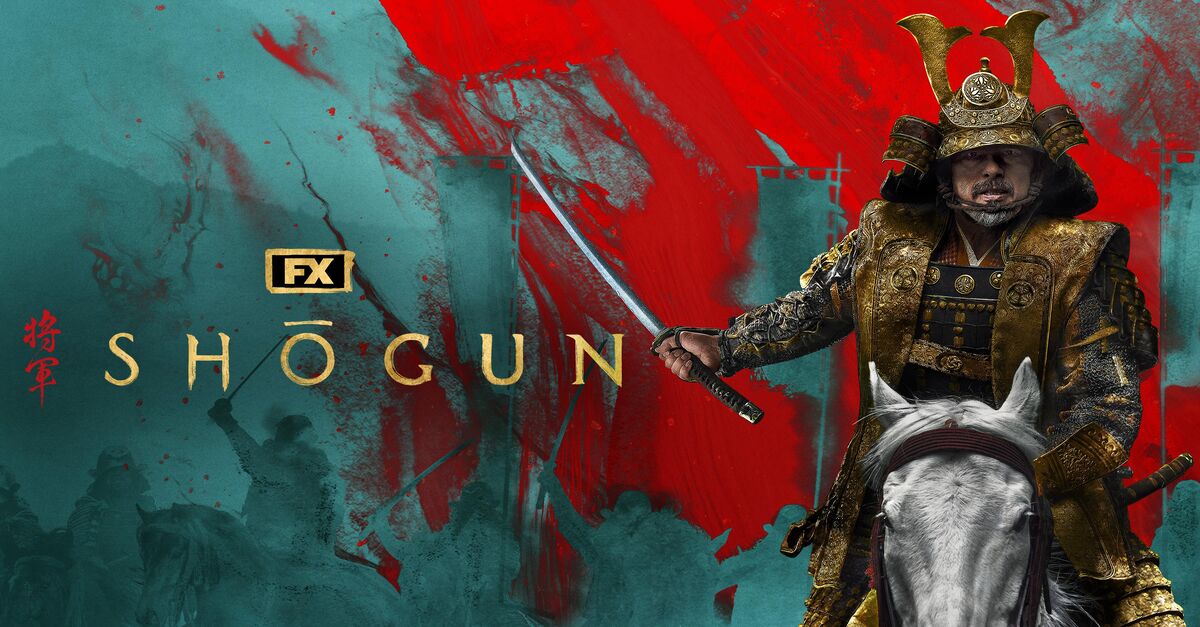
A surprisingly faithful adaptation of James Clavell’s novel that nevertheless reclaims it for the people it was actually about, Shōgun delivers exactly the things that made Game of Thrones so irresistible: the compelling characters, the high stakes, the subtle political maneuvering, the gorgeously realized setting. And yes, it’s full of people talking. Cosmo Jarvis’s John Blackthorne, at once a blowhard who can’t keep from imposing his worldview on a complex political situation that has nothing to do with him, and an intelligent, thoughtful man who slowly learns a new language and way of life. Anna Sawai’s Mariko, trapped by her gender and by her family’s role in Japan’s tumultuous succession games, playing the demure, obedient lady to the hilt, and nevertheless managing to cut her opponents to the bone. Tadanobu Asano’s Yabushige, scrambling desperately to appease multiple masters, slowly growing more comically philosophical as his options dwindle. Looming above them all, Hiroyuki Sanada’s Toranaga, who says little but directs all, whose ambition slowly and patiently reshapes his world. It’s through the conversations between these characters—and a vast and no less fascinating supporting cast—that Shōgun reminds us it is possible to tell a thrilling story of war and conquest without staging battle scenes with thousands of extras. That a simple tea ceremony can be as gutting as a beloved character committing seppuku. I am politely skeptical about FX’s ability to continue this show past the confines of Clavell’s novel, but having hit on the Game of Thrones formula so successfully, I can’t blame them for wanting to keep it going as long as they can—and am even cautiously excited.
Conversation is also at the heart of Interview With the Vampire, but whereas Shōgun‘s exchanges are subtle and full of unspoken meaning, in AMC’s adaptation of Anne Rice’s novel, they are overheated and melodramatic, played to the rafters—which is fitting for a show whose writing team boasts so many theater veterans, and whose second season is set in and around a grand guignol theater. Though the season’s events are violent and bloody—vampires Louis (Jacob Anderson) and Claudia (Delainey Hayles) flee the attempted murder of their master Lestat (Sam Reid) and find seeming safety with Armand (Assad Zaman) and his theater troupe, only for their new friends to turn on them, with tragic results—what the present-day framing story reveals that this show isn’t about vampirism so much as it is about marriage. As journalist Daniel (Eric Bogosian) interviews Louis about his life, what he’s actually doing is playing marriage counselor, revealing the abuses and manipulations of his two spouses, and the ways in which they all failed their daughter. The true violence in Interview With the Vampire isn’t the blood-sucking, limb-ripping-off kind. It’s Louis and Armand doing their best George and Martha impression, letting loose decades of frustration and resentment, throwing their most painful secrets at each other’s faces, and then coming back for a second round.
The result might have been trashy, soapy fun if it weren’t so sharply and impeccably written and acted. With a writing team stacked with die-hard Anne Rice fans who are nevertheless aware of the limitations of her work and its previous adaptations, Interview With the Vampire plays merry hell with levels of metafictionality, poking fun at itself while also reminding us that every narrative within it is someone’s story, with its own agenda and obscured elements. The entire cast knocks it out of the park—Reid leavening Lestat’s megalomania with just a hint of self-awareness; Hayles growing from an eternal child to a self-possessed woman; Zaman’s mask of wisdom and tranquility slipping to reveal gaping wounds; Bogosian’s world-weariness giving way to his youthful sense of wonder; most of all, Anderson’s pretense that the story he is telling is safely in the past shattering, revealing the rage and hurt that have never abated. Despite the difference in their tone, both Shōgun and Interview With the Vampire‘s success comes down the same thing—characters we care about, in the hands of writers who care about them, carrying on a conversation that we can’t get enough of.
Rest of the Best:
Baby Reindeer (Netflix)
Adapted from a successful Edinburgh Fringe show, Richard Gadd’s buzzy-yet-harrowing series still bears the hallmarks of a one-man show. It is told like a single, meandering narrative, relating to us, in a conversational, almost intimate way, how a failing comic (Gadd) becomes the obsession of a mentally ill woman (Jessica Gunning), and the how the process of dealing (and mostly failing to deal) with her stalking forces him to confront a past incident of rape and sexual abuse. So the first thing to praise about Baby Reindeer is how well it adapts its source material to a new format, not only expanding it and breaking it down into a coherent episodes (each of which packs a significant punch) but giving space to characters and perspectives outside of Gadd’s: Gunning, of course, whose Martha is at once monstrous, almost admirably intelligent, and deeply pitiable. But also Nava Mau as a trans woman Gadd falls in love with but can’t reveal his vulnerability to; Gerry Dunn as Gadd’s father, who haltingly tries to convey to him that he doesn’t think less of him for being raped; most of all, Tom Goodman-Hill as Gadd’s rapist, whose manipulations are terrifyingly plausible.
Beyond that achievement, however, I think what most strikes me about Baby Reindeer is what it reveals about how mass media tends to handle stories about sexual abuse. Gadd’s character is allowed to be an “imperfect” victim—of both his rapist and his stalker—in a way that women are almost never allowed to be. And on the other hand, being a man means that he can send out unmistakable signs of trauma, and specifically of having been raped, that remain completely illegible to everyone in his vicinity, even the people who love him, until he forces his way out from under a mountain of social expectations and actually says the unimaginable. As much as it is a deeply personal and idiosyncratic story, Baby Reindeer is also a commentary on how we process the issue of sexual violence, in fiction and real life.
Constellation (Apple TV+)
A somewhat qualified recommendation here, since Apple pulled the plug on this intriguing series when it was still only part-way through its story. Nevertheless, there’s much here to enjoy. Noomi Rapace plays an astronaut who returns to Earth after an accident only to discover that her life is subtly different: her husband acts distant; her colleague’s wife has the wrong name; her car is the wrong color. It’s easy, from that description, to guess what SFnal trope is being deployed, but Constellation plays things very close to the vest, forcing the audience to watch closely, untangling seeming contradictions—why is Jonathan Banks’s NASA scientist suddenly a washed-up ex-astronaut shilling his memoir on a cruise ship?—and working out for ourselves what’s going on. Contributing to this satisfying sense of disorientation is the fact that the show depicts Rapace’s predicament almost like a haunting, treating space exploration—and the specific situation that she finds herself in—like a supernatural occurrence. The result is atmospheric, but also thrilling and compelling, as Rapace not only realizes what’s happening to her, but forges bonds with people to whom she is really a stranger. It’s a great shame that Apple chose not to continue the show, but even what we got of it is extremely impressive.
Dead Boy Detectives (Netflix)
After American Gods, Good Omens, and The Sandman, it seemed like the time to admit that my reaction to adaptations of Neil Gaiman’s writing is roughly on par with my reaction to that writing itself—the materials of a great story always seem to be there, but somehow the execution results in something flat and uninvolving. I expected no better from Dead Boy Detectives, which adapts a Sandman story about two teenage ghosts who decide to forgo the afterlife in favor of solving mysteries on Earth, but instead I found something charming and vibrant. With only eight episodes on a format that might have once garnered fifteen or twenty, Dead Boy Detectives nevertheless instantly kicks into gear. Everything about it seems to work from the outset: the relationship between the two leads, fussy Edwardian schoolboy Edwin (Charles Rexstrew) and laid back 80s teen Charles (Jayden Revri), the quirky town fully of equally quirky characters they arrive in, the twisty, well-crafted mysteries of the week. Most of all, the unrequited romance between the two boys, which is handled sensitively and thoughtfully. Netflix unfortunately cancelled Dead Boy Detectives after only one season—either because of its by-now infamous unwillingness to let a show grow an audience, or because the revelations about Gaiman have made his name toxic—but the eight episodes we did get are an absolute delight.
Delicious in Dungeon (Netflix)
As someone for whom manga and anime are largely unknown quantities, I might have been expected to give this series, an adaptation of a bestselling manga by Ryoko Kui, a pass. If it weren’t for one thing: the premise, in which a troupe of D&D adventurers decide their best way to venture deep into a dungeon (and rescue a missing member of their party) is to capture and cook the monsters lurking within it, was utterly original and irresistible. The series’s handling of this premise is at once comedic—each episode is intercut with recipe cards informing you how you can make sorbet from ghosts, or how best to prepare dragon meat—and deadly serious. It treats the dungeon like an ecosystem, whose monsters function according to the logic of nature rather than the supernatural, each occupying their own ecological niche. And it gradually reveals the type of weirdos who would be willing to to try to unravel that ecosystem: a dwarf traumatized by the time he might have committed survival cannibalism; an autistic warrior who is utterly obsessed with monsters; a fussy magician who quickly reveals that no dark magic is beneath her; and an over-it, middle aged thief who just wants to get paid. The result is a wholly original fantasy story, gloriously realized with fantastic animation and voice work. In a year in which streaming TV always seemed to be converging on the lowest common denominator, this show—the product of a partnership between Netflix and heralded anime creators Studio Trigger—is a welcome example of originality, of trusting that if you put something new and different in front of them, audiences will respond.
Fantasmas (Max)
Hot on the heels of the cancelled-too-soon Los Espookys, and his movie Problemista, Julio Torres returns with yet another series that blends fantasy, comedy, surrealism, and deliberately chintzy-looking set design. In the show’s framing story, set in a quasi-futuristic New York, Torres plays a vaguely-defined creative (in one scene he consults on a new crayon color) who is rocked by the news that he must provide Proof of Existence to keep his apartment. Strenuously avoiding this bureaucratic necessity and its hidden emotional implications, he instead embarks on a quest to retrieve an oyster-shaped earring with which he can prove that his birthmark is getting bigger, and thus that he is dying of cancer. As convoluted and absurd as that story is, the bulk of Fantasmas is spent on individual sketches, stories that are told to Torres or which he stumbles upon, which often feature some major guest stars. Bowen Yang plays an elf who is suing Santa and Mrs. Claus for abusive labor practices. Emma Stone is a castmember on a Real Housewives-type show who realizes that she and the other women are being brainwashed. Steve Buscemi plays the letter Q in a Behind the Music-style documentary about how he overcame being one of the least-used letters of the alphabet. The result, like all of Torres’s work, is weird but expertly made, and like absolutely nothing else on TV.
Ludwig (BBC)
Is there a hole in your life where a quirky mystery show about an oddball, Sherlock Holmes-style detective could fit? Well, look no further than Ludwig, a show whose only flaw is that it’s from the BBC, so instead of getting twenty-two episodes, we have to content ourselves with six. David Mitchell plays John Taylor, a reclusive puzzle maker with social anxiety who is informed by his sister in law (Anna Maxwell Martin) that his twin brother James, a police detective, has gone missing. Naturally this leads to John taking James’s place and immediately beginning to solve murders through the use of logical deduction and puzzle-solving skills. This is, obviously, an absurd premise—as is the fact that the Cambridge police apparently encounter a large number of murders that can be reduced to a logic puz
Author Of article : Abigail Nussbaum


Saint James Talarico (he/him)
David Harsanyi, Washington Examinerمصدر …
