
As Biolabs Multiply, Concerns About Oversight Grow

Raghunand Tirumalai loves to talk about how well-run his laboratory is. “We’re very proud of the setup we have here,” he said on a Friday afternoon this October, standing in his office on the campus of the Center for Cellular and Molecular Biology (CCMB) in Hyderabad, India. The office was decorated with colorful artwork, including posters about tuberculosis and tiny plastic figurines of deadly bacteria and viruses.
Tirumalai joined CCMB in 2008 to study what makes the tuberculosis bacterium so virulent — knowledge that can help design better treatments for a disease that kills tens of thousands of people in India every year. This requires his team to work with live tuberculosis bacteria, a high-stakes dance that takes place under rigorous safety protections.
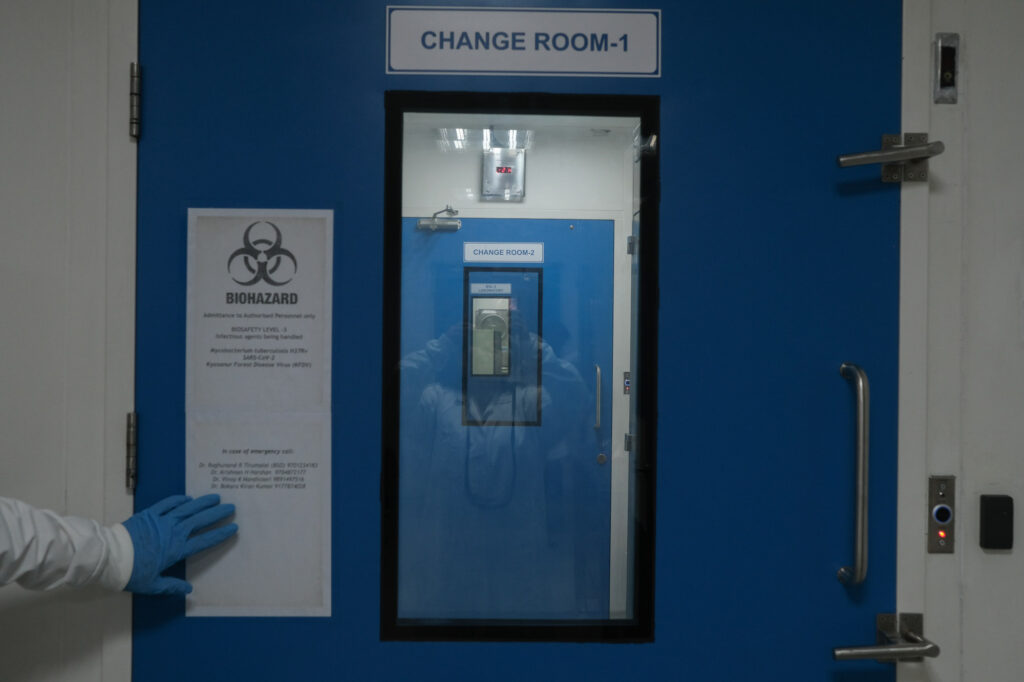
To enter the lab, Tirumalai first scans his fingerprint at the door. Next, he passes through two change rooms. In the first, he puts on shoe covers, a hair net, and latex gloves. He also dons a puncture-resistant Tyvek suit, an N95 mask, and safety goggles. In the second room, he snaps a second pair of latex gloves onto the cuffs of his suit so that no skin is exposed.
Inside the final door, the fluorescent-lit room has crack-free walls, gleaming steel tables, and smooth epoxy floors, so no pathogens can escape a scrubbing. The air cycles through HEPA filters. To minimize infection risk, researchers handle pathogens inside Class II cabinets, large glass-fronted boxes.
In a room above the laboratory, large machines pump day and night to keep the air inside at a lower pressure than the surrounding building, so airborne pathogens won’t flow out of the room.
No single authority oversees these labs.
Facilities like CCMB’s are crucial for pathogen research. They are also at the center of ongoing debates over how to balance the need for lab space with the risks of handling — and sometimes re-engineering — pathogens.
High-containment facilities around the world work with such pathogens. No single authority oversees these labs; no single treaty governs them or ensures high standards; nobody is even sure how many there are. In some countries, the labs are tightly regulated, at least on paper; in others, they are not.
Some pathogens and experiments pose broad risks, and even intensive safety protocols can fail. One recent analysis of the global scientific literature identified 94 separate incidents of lab leaks between 2000 and 2021, infecting 309 people and killing eight. Some experts believe that kind of leak, at a lab in China, was responsible for the Covid-19 pandemic. Although many other experts strongly disagree with this take, subsequent investigations have uncovered safety lapses at Chinese labs, and set off fierce debates about how to oversee risky research worldwide — especially for those rare experiments where a major breach could have global consequences.
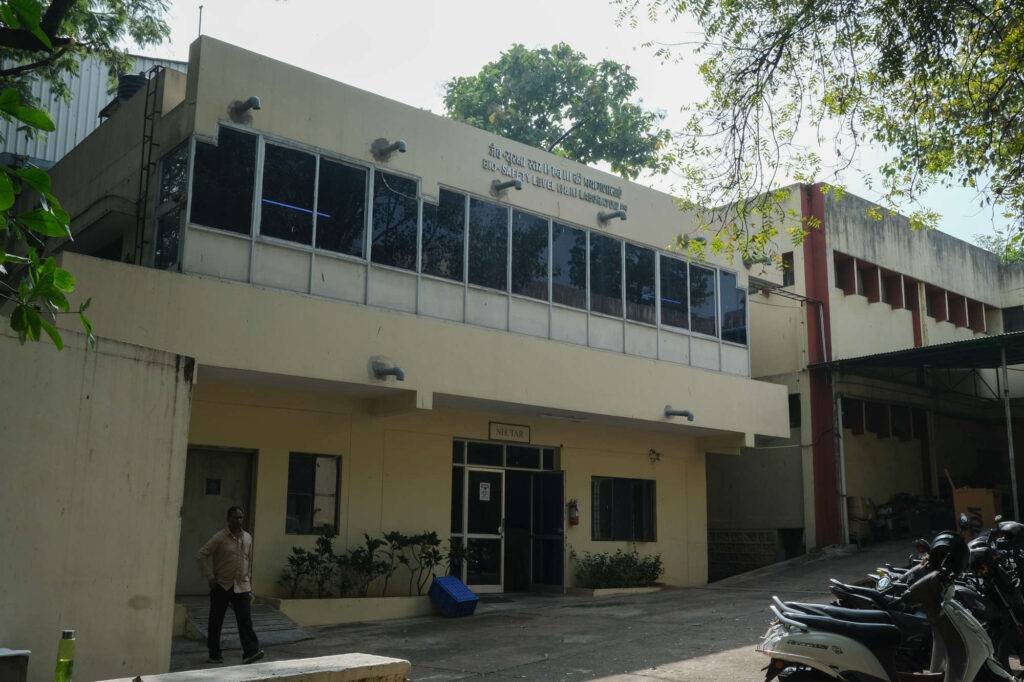
At the same time, the pandemic has also prompted what some experts describe as a global boom in the construction of such facilities. As countries struggled to respond to the pandemic, many decided that they need more laboratories in order to prepare for future outbreaks.
Those tensions are apparent in India, the world’s most populous nation and a global biotechnology powerhouse. According to the Department of Biotechnology, the country has 47 certified research laboratories (including the CCMB facility in Hyderabad) rated to biosafety level 3, meaning they allow scientists to work with highly-transmissible pathogens like coronaviruses or West Nile virus — more than almost any other country in the world, although still far behind the U.S. and probably well behind China. India also has one functional facility rated at the highest biosafety level, BSL-4, meaning they can work with lethal pathogens that have no known cure . (Another was reportedly inaugurated in November 2024.)
More may be coming: After the first waves of Covid-19, state and national officials in India announced ambitious plans to expand pathogen research. Since then, proposals to build at least 26 new BSL-3 and at least four new BSL-4 laboratories have been announced. More vaccine manufacturing facilities that work with live viruses are also under development — although it’s not clear regulators even know how many of those facilities currently exist in the country.
Can safety infrastructure keep up?
Policymakers introduced new biosafety regulations in 2017, but interviews with more than two dozen scientists and biosafety experts suggest that implementation is still ongoing. Some key government labs have practices on par with international standards, but many others are yet to catch up. The country has a shortage of biosafety professionals, several experts said, and there’s sometimes limited awareness of safety protocols: In many labs, “my sense is that the scientists don’t really fully understand why it’s important,” said Shruti Sharma, a fellow at Carnegie India who has studied pathogen research in the country.
Meanwhile, even regulators seem to be uncertain about who — if anyone — within the government is responsible for monitoring biosafety protocols at vaccine manufacturing facilities.
The impact of these gaps is hard to judge, given that Indian regulators are opaque with key data, such as the numbers of biosafety accidents. As such, there remains some disagreement over whether the growth of BSL-3 and BSL-4 laboratories here represents a global threat, and some Indian scientists at key government labs argue that concerns are overblown.
India has far fewer high-containment laboratories than the United States, which has experienced its own share of laboratory safety issues. And researchers in India — as in other countries in the Global South — appear to be mostly working with pathogens that circulate widely outside laboratory walls. They tend not to perform the kind of research, sometimes called gain-of-function research of concern, which aims to deliberately make pathogens more deadly or more transmissible, and that can provoke intense controversy.
What’s clear is that India’s policymakers have ambitious plans for pathogen research. Can safety infrastructure keep up?
* * *
It’s not ALWAYS easy to work with viruses and bacteria without getting infected by them, and building and running a high-containment lab is difficult and expensive. In Hyderabad, the roughly 500-square foot CCMB facility cost around 20 million rupees (around $235,000) when it was built in 2010. Lab workers must get certified before they can enter the lab, and an engineering team needs to be available in case the equipment malfunctions.
A BSL-4 lab is even more complex. The facilities are “a beast” to run, said Chandrabhas Narayana, the director of Kerala’s Rajiv Gandhi Center for Biotechnology. A BSL-4 lab must be either housed in its own designated building or isolated in a restricted zone of a building, and policies to sterilize waste are more stringent than for BSL-3 facilities. Lab workers must change clothes before entry and shower before exit, instead of just putting on masks and suits. The biosafety cabinets are airtight, and when scientists are handling pathogens outside them, they must wear positive-pressure suits, which resemble spacesuits.
With each new safety feature, the costs escalate. In 2020, the Rajiv Gandhi Center planned to build a 10,000 square foot BSL-4 lab. Such a facility would have cost an estimated 1 billion rupees (around $11.7 million) to set up, and another 500 million rupees each year to operate, according to Narayana. (Ultimately, the proposed BSL-4 lab wasn’t built.)
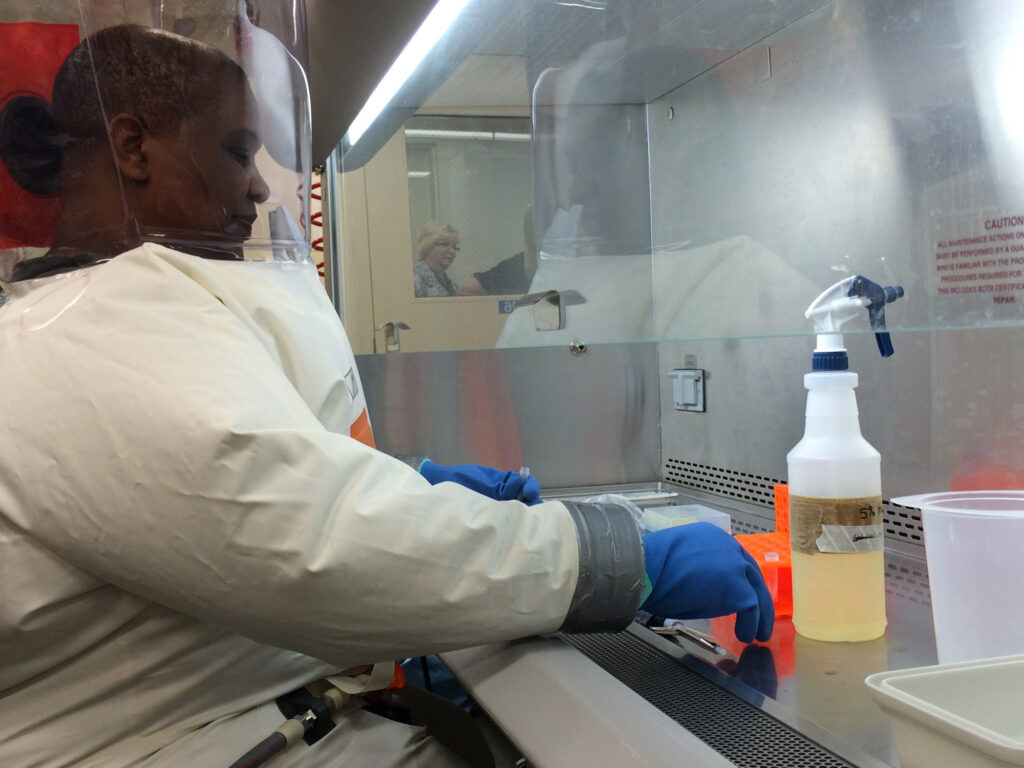
Since the early 2000s, more countries have decided those expenses are worth taking on. The Indian government opened the first BSL-4 laboratory in Asia in 2000 at the National Institute of High-Security Animal Diseases, or NIHSAD, which works on veterinary pathogens like avian influenza. The next decade also saw the construction of several government-funded BSL-3 facilities, many working with tuberculosis. At the time, India had a skeletal biosafety framework, that was geared heavily towards genetic engineered plants. So, scientists involved in building these early labs relied on biosafety guides from the World Health Organization and the U.S. Centers for Disease Control and Prevention to develop their own protocols, said Harshad Murugkar, biosafety officer at NIHSAD today.
The published literature suggests that biosafety at some Indian research labs was deficient. A 2002 paper, for instance, linked two polio outbreaks in the country to one or more lab leaks.
More BSL-3 labs were constructed in the 2010s, along with the National Institute of Virology’s BSL-4 facility in Pune. But by then, the NIHSAD decided to re-classify itself as a BSL-3, given the high costs of upkeep and the increasingly stringent global standards for the highest-security labs.
It’s unclear when the first Indian BSL-3 vaccine manufacturing facilities were built, although at least two companies claim to run them today.
As high-containment laboratories opened in India and other countries, experts raised concerns about biosafety practices in the Global South. Around 2012, anonymized inspections co-sponsored by the Asia-Pacific Biosafety Association in multiple Asian countries found widespread issues.
Around that time, experts at the U.S. National Academies of Sciences conducted multiple workshops on laboratory safety, repeatedly identifying deficiencies in laboratories in South and Southeast Asia. At one 2014 meeting sponsored by the organization, Aparna Singh Shah, a World Health Organization official stationed in New Delhi, described laboratories in the region as poorly monitored, underequipped, and staffed by workers with little training, according to a summary of her remarks. “Biosafety and biosecurity awareness and practices are inadequate,” the summary warns.
* * *
In 2014, around the time of the National Academies of Sciences meetings, experts in the U.S. were undergoing their own reckoning on biosafety, after a string of missteps at government labs. And more critics were wrestling with that fact that, for all the high consequences of pathogen research, regulation around the world was often sparse — or didn’t exist at all.
Many countries today oversee pathogen research using a model developed in the U.S. in the 1970s, which permits research institutions working with dangerous pathogens to largely police themselves. Even today, some pathogen experiments in the U.S. are unregulated, or bound only by a set of guidelines, also originating in the 1970s, that allow scientific institutions and their government funders to proceed with limited independent oversight.
Even today, some pathogen experiments in the U.S. are unregulated.
As was the case in many countries, Indian regulations, which debuted in 1989, took their cue from the American model. They left most lab oversight to local committees of scientists, called Institutional Biosafety Committees (abbreviated in India as IBSCs), who reported to a national committee of expert scientists.
“Even as recently as 10 years ago, there still was no national framework for what biosafety should look like in the tens of thousands of clinical and diagnostic and research labs and pharma across the country, and that was a bit surprising,” said Ryan Burnette, a biosafety and biosecurity expert at Merrick and Company, an engineering firm, who has consulted on laboratory construction and maintenance projects in India. “They were well behind the curve a decade ago, and I think they’re still slow to catch up on that.”
Indian regulators were aware of such concerns, said SR Rao, a senior official in the Department of Biotechnology who retired in 2019. Overseas visitors often complained about glaring biosafety shortcomings, worrying policymakers. “There was a serious concern in higher offices,” Rao said.
In 2017, Rao’s office revised the country’s biosafety rules. Under a new certification system, BSL-3 labs have to get a certified external agency to test all their equipment each year.
The new regulations, and a series of awareness programs that government officials conducted subsequently, led to changes at some facilities. Many labs that had not formed IBSCs did so after 2017. In Mumbai, a nonprofit lab doing tuberculosis research had to extensively rework the building for their BSL-3 facility, after scientists there realized their old plan wasn’t in line with regulatory requirements.
But even as the new rules went into effect, the country had to grapple with another problem: It didn’t have enough laboratories to deal with a crisis.
* * *
When Covid-19 hit India, researchers there found themselves desperately short of laboratory space to study the virus. The onus of drug testing and research for a country of more than 1.4 billion people fell on India’s few dozen BSL-3 labs.
“That’s when we woke up and said, look, if this happens to us again, then we have no way of handling it,” said Tirumalai, the scientist from the Center for Cellular and Molecular Biology in Hyderabad. “The load is going to be too much for one institute.”
Even before Covid-19, researchers said, a shortage of laboratory capacity could make it hard for them to deal with emerging threats. For instance, public health researchers in the state of Kerala, which experiences outbreaks of deadly Nipah virus every few years, have to rely, for some research, on the BSL-4 laboratory in Pune, over 800 miles away. The shortage of laboratory space delays important science: Narayana, the director of Kerala’s Rajiv Gandhi Center for Biotechnology, said their institute helped developed an antibody treatment for the Nipah virus, but now is waiting to test the treatment in animals at the Pune facility.
 asia pacific business & economy health & wellness news science technology biolabs covid-19 gain of function india lab leak
Author Of article : Priyanka Pulla, Michael Schulson / Undark


Saint James Talarico (he/him)
David Harsanyi, Washington Examinerمصدر …
