
The Army of God Comes Out of the Shadows
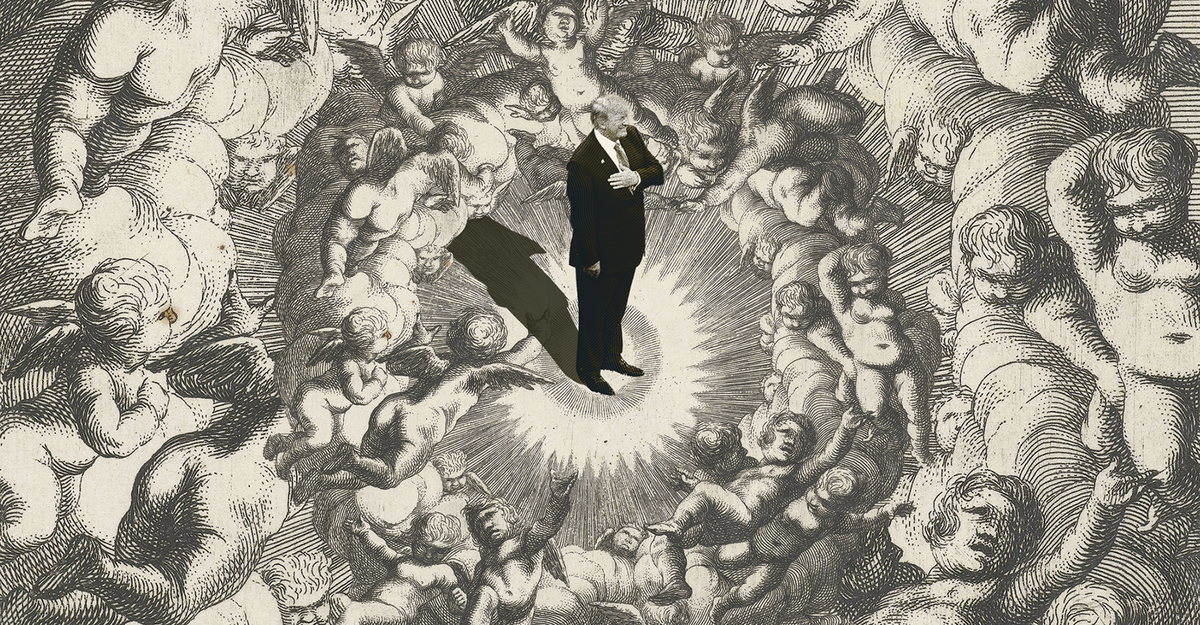
On the Thursday night after Donald Trump won the presidential election, an obscure but telling celebration unfolded inside a converted barn off a highway stretching through the cornfields of Lancaster County, Pennsylvania. The place was called Gateway House of Prayer, and it was not exactly a church, and did not exactly fit into the paradigms of what American Christianity has typically been. Inside, there were no hymnals, no images of Jesus Christ, no parables fixed in stained glass. Strings of lights hung from the rafters. A huge map of the world covered one wall. On the others were seven framed bulletin boards, each representing a theater of battle between the forces of God and Satan—government, business, education, family, arts, media, and religion itself. Gateway House of Prayer, it turned out, was a kind of war room. And if its patrons are to be believed, at least one person, and at peak times dozens, had been praying every single minute of every single day for more than 15 years for the victory that now seemed at hand. God was winning. The Kingdom was coming.
“Hallelujah!” said a woman arriving for the weekly 7 o’clock “government watch,” during which a group of 20 or so volunteers sits in a circle and prays for God’s dominion over the nation.
“Now the work begins!” a man said.
“We have to fight, fight, fight!” a grandmother said as they began talking about how a crowd at Trump’s election watch party had launched into the hymn “How Great Thou Art.”
“They were singing that!” another man said.
Yes, people replied; they had seen a video of the moment. As the mood in the barn became ever more jubilant, the grandmother pulled from her purse a shofar, a hollowed-out ram’s horn used during Jewish services. She blew, understanding that the sound would break through the atmosphere, penetrate the demonic realm, and scatter the forces of Satan, a supernatural strike for the Kingdom of God. A woman fell to the floor.
“Heaven and Earth are coming into alignment!” a man declared. “The will of heaven is being done on Earth.”
What was happening in the barn in Lancaster County did not represent some fringe of American Christianity, but rather what much of the faith is becoming. A shift is under way, one that scholars have been tracking for years and that has become startlingly visible with the rise of Trumpism. At this point, tens of millions of believers—about 40 percent of American Christians, including Catholics, according to a recent Denison University survey—are embracing an alluring, charismatic movement that has little use for religious pluralism, individual rights, or constitutional democracy. It is mystical, emotional, and, in its way, wildly utopian. It is transnational, multiracial, and unapologetically political. Early leaders called it the New Apostolic Reformation, or NAR, although some of those same leaders are now engaged in a rebranding effort as the antidemocratic character of the movement has come to light. And people who have never heard the name are nonetheless adopting the movement’s central ideas. These include the belief that God speaks through modern-day apostles and prophets. That demonic forces can control not only individuals, but entire territories and institutions. That the Church is not so much a place as an active “army of God,” one with a holy mission to claim the Earth for the Kingdom as humanity barrels ever deeper into the End Times.
Although the secular establishment has struggled to take all of this seriously, Trump has harnessed this apocalyptic energy to win the presidency twice.
If you were curious why Tucker Carlson, who was raised Episcopalian, recently spoke of being mauled in his sleep by a demon, it may be because he is absorbing the language and beliefs of this movement. If you were questioning why Elon Musk would bother speaking at an NAR church called Life Center in Harrisburg, it is because Musk surely knows that a movement that wants less government and more God works well with his libertarian vision. If you wanted to know why there were news stories about House Speaker Mike Johnson, a Southern Baptist, displaying a white flag with a green pine tree and the words An Appeal to Heaven outside his office, or the same flag being flown outside the vacation home of Supreme Court Justice Samuel Alito, a Catholic, the reason is that the Revolutionary War–era banner has become the battle flag for a movement with ideological allies across the Christian right. The NAR is supplying the ground troops to dismantle the secular state.

And if you are wondering where all of this is heading now that Trump has won the presidency, I was wondering the same thing. That is why I was sitting in the circle at Gateway House of Prayer, where, about 20 minutes into the evening, I got my first clue. People had welcomed me warmly. I had introduced myself as a reporter for The Atlantic. I was taking notes on Earth-heaven alignment when a woman across from me said, “Your writers have called us Nazis.”
She seemed to be referring to an article that had compared Trump’s rhetoric to Hitler’s. I said what I always say, which is that I was there to understand. I offered my spiritual bona fides—raised Southern Baptist, from Alabama. The woman continued: “It’s an editorial board that is severely to the left and despises the Trump movement.” A man sitting next to me came to my defense. “We welcome you,” he said, but it was clear something was off, and that something was me. The media had become a demonic stronghold. The people of God needed to figure out whether I was a tool of Satan, or possibly whether I had been sent by the Almighty.
“I personally feel like if you would like to stay with us, then I would ask if we could lay hands on you and pray,” a woman said.
“We won’t hurt you,” another woman said.
“We just take everything to God,” a woman sitting next to me said. “Don’t take it personally.”
The praying began, and I waited for the judgment.
How all of this came to be is a story with many starting points, the most immediate of which is Trump himself. In the lead-up to the 2016 election, establishment leaders on the Christian right were backing candidates with more pious pedigrees than Trump’s. He needed a way to rally evangelicals, so he turned to some of the most influential apostles and prophets of the NAR, a wilder world where he was cast as God’s “wrecking ball” and embraced by a fresh pool of so-called prophecy voters, people long regarded as the embarrassing riffraff of evangelical Christianity. But the DNA of that moment goes back further, to the Cold War, Latin America, and an iconoclastic seminary professor named C. Peter Wagner.
He grew up in New York City during the Great Depression, and embraced a conservative version of evangelical Christianity when he was courting his future wife. They became missionaries in Bolivia in the 1950s and ’60s, when a wave of Pentecostalism was sweeping South America, filling churches with people who claimed that they were being healed, and seeing signs and wonders that Wagner initially dismissed as heresy. Much of this fervor was being channeled into social-justice movements taking hold across Latin America. Che Guevara was organizing in Bolivia. The civil-rights movement was under way in the United States. Ecumenical organizations such as the World Council of Churches were embracing the theology of liberation, emphasizing ideas such as the social sin of inequality and the need for justice not in heaven but here and now.
In the great postwar competition for hearts and minds, conservative American evangelicals—and the CIA, which they sometimes collaborated with—needed an answer to ideas they saw as dangerously socialist. Wagner, by then the general director of the Andes Evangelical Mission, rose to the occasion. In 1969, he took part in a conference in Bogotá, Colombia, sponsored by the Billy Graham Evangelistic Association that aimed to counter these trends. He wrote a book—Latin American Theology: Radical or Evangelical?—which was handed out to all participants, and which argued that concern with social issues “may easily lead to serving mammon rather than serving God.” Liberation theology was a slippery slope to hell.
After that, Wagner became a professor at Fuller Theological Seminary, teaching in the relatively experimental field of church growth. He began revisiting his experience in Bolivia, deciding that the overflowing churches he’d seen were a sign that the Holy Spirit was working in the world. He was also living in the California of the 1970s, when new religions and cults and a more freewheeling, independent, charismatic Christianity were proliferating, a kind of counter-counterculture. Droves of former hippies were being baptized in the Pacific in what became known as the Jesus People movement. Preachers such as John Wimber, a singer in the band that turned into the Righteous Brothers, were casting out demons before huge crowds. In the ’80s, a group of men in Missouri known as the Kansas City Prophets believed they were restoring the gift of prophecy, understanding this to be God’s natural way of talking to people.
Wagner met a woman named Cindy Jacobs, who understood herself to be a prophet, and believed that the “principalities” and “powers” mentioned in the Book of Ephesians were actually “territorial spirits” that could be defeated through “spiritual warfare.” She and others formed prayer networks targeting the “10/40 window”—a geographic rectangle between the latitudes of 10 and 40 degrees north that included North Africa, the Middle East, and other parts of Asia that were predominantly Muslim, Buddhist, and Hindu.
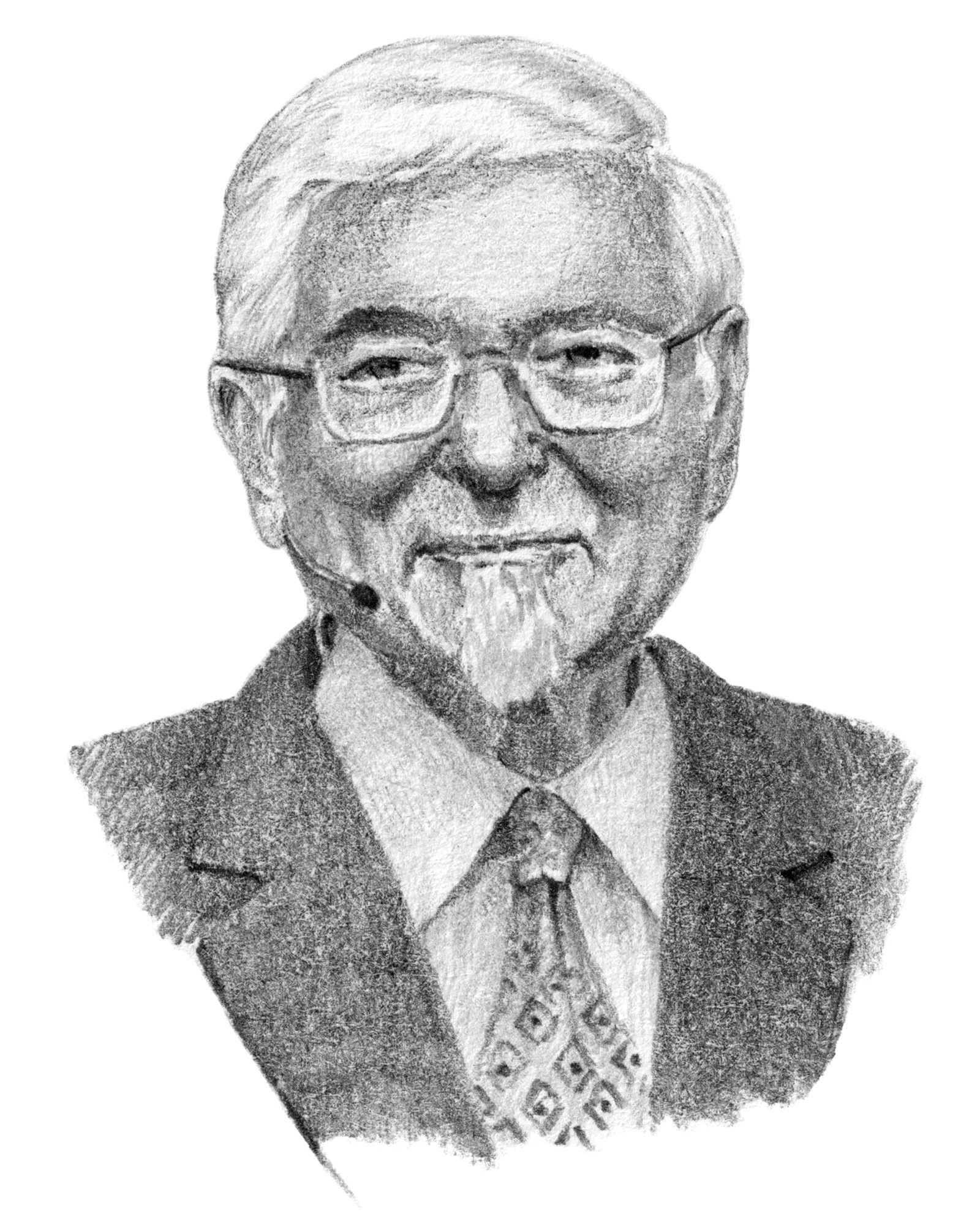
Wagner also became captivated by a concept called dominionism, a major conceptual shift that had been emerging in conservative theological circles. At the time, the prevailing view was that God’s mandate for Christians was simple evangelism, person by person; the Kingdom would come later, after the return of Jesus Christ, and meanwhile, the business of politics was, as the Bible verse goes, rendered unto Caesar. The new way of thinking was that God was calling his people to establish the Kingdom now. To put it another way, Christians had marching orders—a mandate for aggressive social and institutional transformation. The idea had deep roots in a movement called Christian Reconstructionism, whose serious thinkers—most prominently a Calvinist theologian named R. J. Rushdoony—were spending their lives working out the details of what a government grounded in biblical laws would look like, a model for a Christian theocracy.
By 1996, Wagner and a group of like-minded colleagues were rolling these ideas into what they were calling the New Apostolic Reformation, a term meant to evoke their conviction that a fresh outpouring of the Holy Spirit was moving around the globe, endowing believers with supernatural power and the authority to battle demonic forces and establish God’s Kingdom on Earth. The NAR vision was not technically conservative but radical: Constructing the Kingdom meant destroying the secular state with equal rights for all, and replacing it with a system in which Christianity is supreme. As a practical matter, the movement put the full force of God on the side of free-market capitalism. In that sense, Wagner and his colleagues had found the answer to liberation theology that they’d been seeking for decades.
Wagner, who died in 2016, wrote dozens of additional books with titles such as Dominion! and Churchquake! The movement allowed Christianity to be changed and updated, embracing the idea that God was raising new apostles and prophets who could not only interpret ancient scripture but deliver “fresh words” and dreams from heaven on a rolling, even daily basis. One of Wagner’s most talented acolytes, a preacher named Lance Wallnau, repackaged the concept of dominionism into what he popularized as the “7 Mountain Mandate,” essentially an action plan for how Christians could dominate the seven spheres of life—government, education, media, and the four others posted on the walls like targets at Gateway House of Prayer.
What happened next is the story of these ideas spreading far and wide into an American culture primed to accept them. Churches interested in growing found that the NAR formula worked, delivering followers a sense of purpose and value in the Kingdom. Many started hosting “7M” seminars and offering coaching and webinars, which often drew wealthy businesspeople into the fold. After the 2016 election, a group of the nation’s ultra-wealthy conservative Christians organized as an invitation-only charity called Ziklag, a reference to the biblical city where David found refuge during his war against King Saul. According to an investigation by ProPublica, the group stated in internal documents that its purpose was to “take dominion over the Seven Mountains.” Wallnau is an adviser.
By last year, 42 percent of American Christians agreed with the statement “God wants Christians to stand atop the ‘7 Mountains of Society,’ ” according to Paul Djupe, a Denison University political scientist who has been developing new surveys to capture what he and others describe as a “fundamental shift” in American Christianity. Roughly 61 percent agreed with the statement that “there are modern-day apostles and prophets.” Roughly half agreed that “there are demonic ‘principalities’ and ‘powers’ who control physical territory,” and that the Church should “organize campaigns of spiritual warfare and prayer to displace high-level demons.”
Overall, Djupe told me, the nation continues to become more secular. In 1991, only 6 percent of Americans identified as nonreligious, a figure that is now about 30 percent. But the Christians who remain are becoming more radical.
“They are taking on these extreme beliefs that give them a sense of power—they believe they have the power to change the nature of the Earth,” Djupe said. “The adoption of these sort of beliefs is happening incredibly fast.”
The ideas have seeped into Trumpworld, influencing the agenda known as Project 2025, as well as proposals set forth by the America First Policy Institute. A new book called Unhumans, co-authored by the far-right conspiracy theorist Jack Posobiec and endorsed by J. D. Vance, describes political opponents as “unhumans” who want to “undo civilization itself” and who currently “run operations in media, government, education, economy, family, religion, and arts and entertainment”—the seven mountains. The book argues that these “unhumans” must be “crushed.”
“Our study of history has brought us to this conclusion: Democracy has never worked to protect innocents from the unhumans,” the authors write. “It is time to stop playing by rules they won’t.”
my own frame of reference for what evangelical Christianity looked like was wooden pews, the ladies’ handbell choir, and chicken casseroles for the homebound. The Southern Baptists of my childhood had no immediate reason to behave like insurgents. They had dominated Alabama for decades, mostly blessing the status quo. When I got an assignment a few years ago to write about why evangelicals were still backing Trump, I mistakenly thought that the Baptists were where the action was on the Christian right. I was working for The Washington Post then, and like many journalists, commentators, and researchers who study religion, I was far behind.
Where I ended up one Sunday in 2021 was a church in Fort Worth, Texas, called Mercy Culture. Roughly 1,500 people were streaming through the doors for one of four weekend services, one of which was in Spanish. Ushers offered earplugs. A store carried books about spiritual warfare. Inside the sanctuary, the people filling the seats were white, Black, and brown; they were working-class and professionals and unemployed; they were former drug addicts and porn addicts and social-media addicts; they were young men and women who believed their homosexual tendencies to be the work of Satan. I met a young woman who told me she was going to Montana to “prophesy over the land.” I met a young man contemplating a future as a missionary, who told me, “If I have any choice, I want to die like the disciples.” They had the drifty air of hippies, but their counterculture was pure Kingdom.
They faced a huge video screen showing swirling stars, crashing waves, and apocalyptic images, including a mushroom cloud. A digital clock was counting down, and when it hit zero, a band—keyboard, guitars, drums—began blasting music that reminded you of some pop song you couldn’t quite place, from some world you’d left behind when you came through the doors. Lights flashed. Machine-made fog drifted through the crowd. People waved colored flags, calling the Holy Spirit in for a landing. Cameras
Author Of article : Stephanie McCrummen


Saint James Talarico (he/him)
David Harsanyi, Washington Examinerمصدر …
