
The Secret to a Better City Is a Two-Wheeler

Luchia Brown used to bomb around Denver in her Subaru. She had places to be. Brown, 57, works part time helping to run her husband’s engineering firm while managing a rental apartment above their garage and an Airbnb out of a section of the couple’s three-story brick house. She volunteers for nonprofits, sometimes offering input to city committees, often on transportation policy. “I’m a professional good troublemaker,” she jokes when we meet in her sun-soaked backyard one fine spring day.
She’s also an environmentally conscious type who likes the idea of driving less. Brown bought a regular bike years ago, but mainly used it just for neighborhood jaunts. “I’m not uber-fit,” she says. “I’m not a slug, but I’m not one of the warriors in Lycra, and I don’t really want to arrive in a sweat.”
Then, a couple of years ago, she heard Denver was offering $400 vouchers to help residents purchase an e-bike—or up to $900 toward a hefty “cargo” model that can haul heavier loads, including children. She’d considered an e-bike, but the city’s offer provided “an extra kick in the derriere to make me do it.”
She opens her garage door to show off her purchase: a bright blue Pedego Boomerang. It’s a pricey model—$2,600 after the voucher—but “it changed my life!” she says. Nowadays, Brown thinks nothing of zipping halfway across town, her long dark-gray hair flying out behind her helmet. Hills do not faze her. Parking is hassle-free. And she can carry groceries in a crate strapped to the rear rack. She’d just ridden 4 miles to a doctor’s appointment for a checkup on a recent hip replacement. She rides so often—and at such speeds—that her husband bought his own e-bike to keep up: “I’m like, ‘Look, when you’re riding with me, it’s not about exercise. It’s about getting somewhere.’”
She ended up gifting the Subaru to her son, who works for SpaceX in Texas. The only car left is her husband’s work truck, which she uses sparingly. She prefers the weirdly intoxicating delight of navigating on human-and-battery power: “It’s joy.”
Many Denverites would agree. Over the two years the voucher program—pioneering in scale and scope—has been in effect, more than 9,000 people have bought subsidized e-bikes. Of those, more than one-third were “income qualified” (making less than $86,900 a year) and thus eligible for a more generous subsidy. People making less than $52,140 got the most: $1,200 to $1,400. The goal is to get people out of their cars, which city planners hope will deliver a bouquet of good things: less traffic, less pollution, healthier citizens.
Research commissioned by the city in 2022 found that voucher recipients rode 26 miles a week on average, and many were using their e-bikes year-round. If even half of those miles are miles not driven, it means—conservatively, based on total e-bikes redeemed to date—the program will have eliminated more than 6.1 million automobile miles a year. That’s the equivalent of taking up to 478 gas-powered vehicles off the road, which would reduce annual CO2 emissions by nearly 190,000 metric tons.
Subsidizing electric vehicles isn’t a new concept, at least when those vehicles are cars. President Barack Obama’s 2009 American Recovery and Reinvestment Act offered up to $7,500 to anyone who bought an electric car or light truck, capped at 200,000 per automaker. In 2022, President Joe Biden’s Inflation Reduction Act created new and similar rebates without the caps. The US government has spent more than $2 billion to date subsidizing EV purchases, with some states and cities kicking in more. Weaning transportation off fossil fuels is crucial to decarbonizing the economy, and EVs on average have much lower life-cycle CO2 emissions than comparable gas vehicles—as little as 20 percent, by some estimates. In states like California, where more than 54 percent of the electricity is generated by renewables and other non–fossil fuel sources, the benefits are even more remarkable.
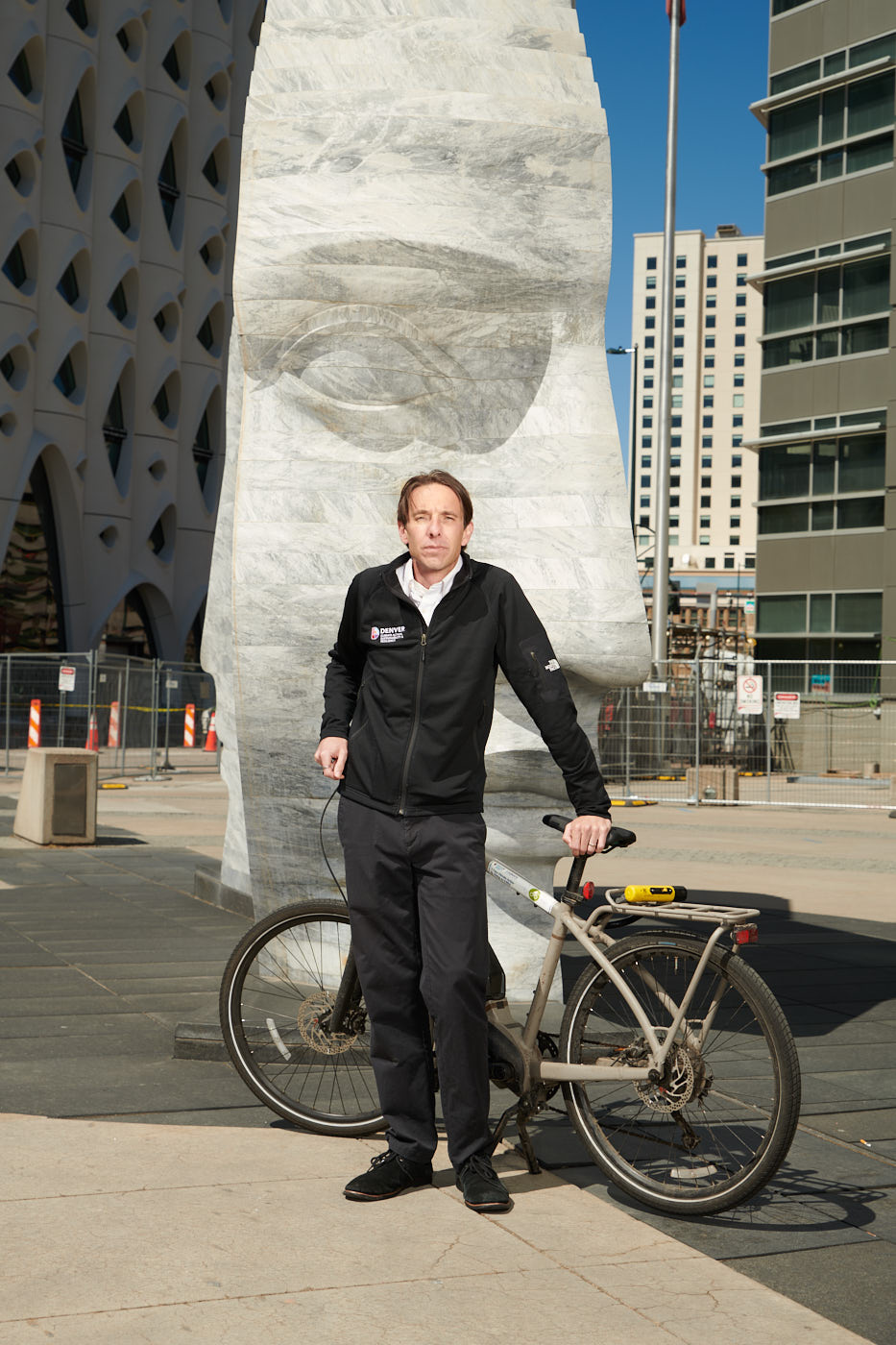
Now, politicians around the country have begun to realize that e-bikes could be even more transformative than EVs. At least 30 states and dozens of cities—from Ann Arbor, Michigan, to Raleigh, North Carolina—have proposed or launched subsidy programs. It’s much cheaper than subsidizing electric cars, and though e-bikes can’t do everything cars can, they do, as Brown discovered, greatly expand the boundaries within which people work, shop, and play without driving. Emissions plummet: An analysis by the nonprofit Walk Bike Berkeley suggests that a typical commuter e-bike with pedal assist emits 21 times less CO2 per mile than a typical electric car (based on California’s power mix) and 141 times less than a gas-powered car. And e-bikes are far less resource- and energy-intensive to manufacture and distribute.
Cities also are coming to see e-bikes as a potential lifeline for their low-income communities, a healthy alternative to often unreliable public transit for families who can’t afford a car. And that electric boost gives some people who would never have considered bike commuting an incentive to try, thus helping facilitate a shift from car dependency to a more bikeable, walkable, livable culture.
In short, if policymakers truly want to disrupt transportation—and reimagine cities—e-bikes might well be their secret weapon.
I’m an avid urban cyclist who rides long distances for fun, but I don’t ride an electric. So when I landed in Denver in April, I rented a Pedego e-bike to see how battery power would affect my own experience of getting around a city.
Reader: It was delightful. Denver is flat-ish, but it’s got brisk winds and deceptively long slopes as you go crosstown. There are occasional gut-busting hills, too, including one leading up to Sunnyside, the neighborhood where I was staying. Riding a regular bike would have been doable for an experienced cyclist like me, but the battery assist made longer schleps a breeze: I rode 65 miles one day while visiting four far-flung neighborhoods. On roads without traffic, I could cruise along at a speedy 18 miles an hour. The Cherry Creek bike trail, which bisects Denver in a southeast slash, was piercingly gorgeous as I pedaled past frothing waterfalls, families of ducks, and the occasional tent pitched next to striking pop art on the creekside walls. My Apple watch clocked a decent workout, but it was never difficult.

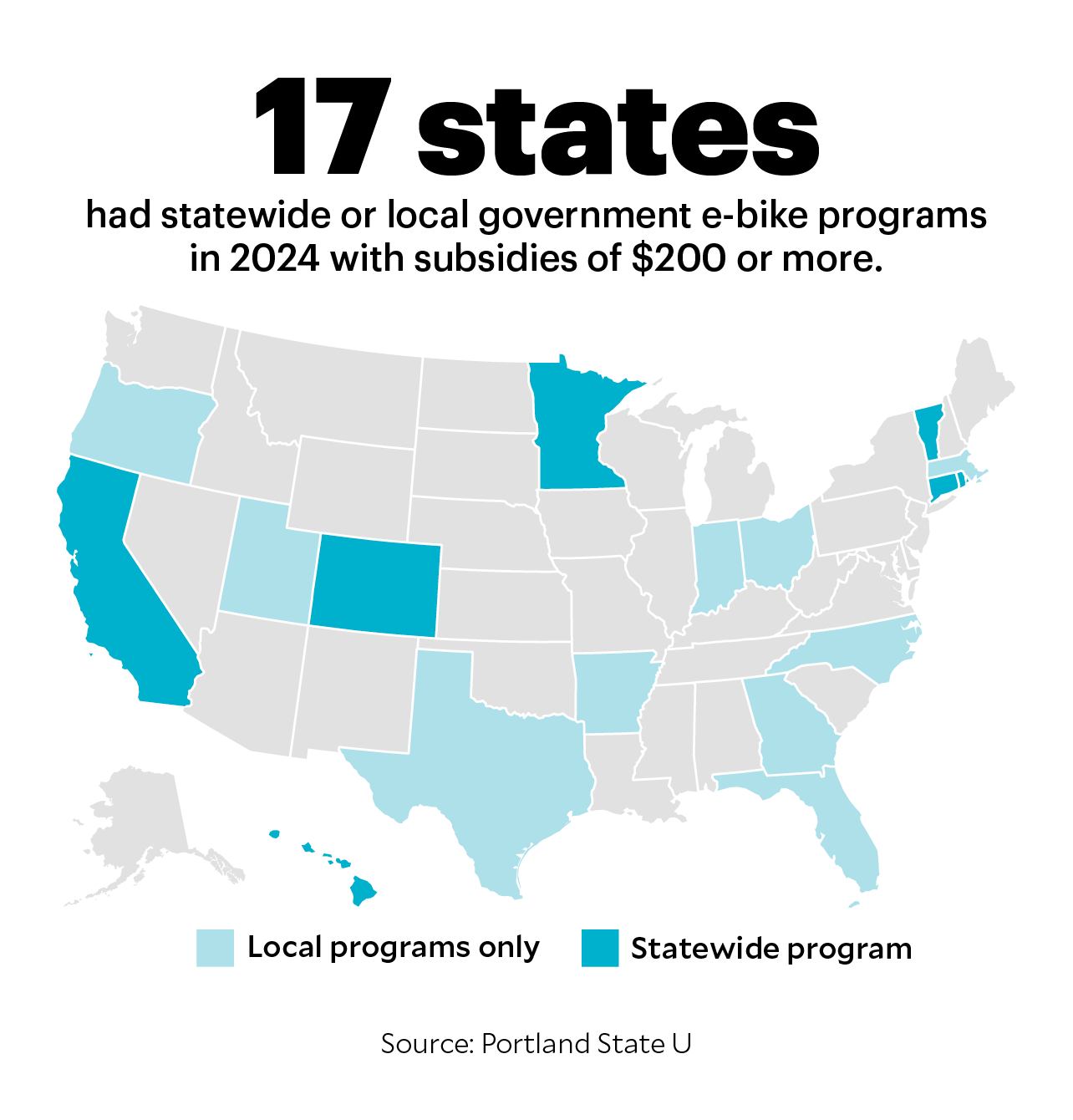
I did a lunch ride another day with Mike Salisbury, then the city’s transportation energy lead overseeing the voucher program. Tall and lanky, with a thick mop of straight brown hair, Salisbury wears a slim North Face fleece and sports a beige REI e-bike dusted with dried mud. He’s a lifelong cyclist, but the e-bike, which he’d purchased about two years earlier, has become his go-to ride. “I play tennis on Fridays, and it’s like 6 miles away,” he says, and he always used to drive. “It would never, ever have crossed my mind to do it on my acoustic bike.”
E-bikes technically date back to 1895, when the US inventor Ogden Bolton Jr. slapped an electric motor on his rear wheel. But for more than a century, they were niche novelties. The batteries of yore were brutally heavy, with a range of barely 10 miles. It wasn’t until the lithium-ion battery, relatively lightweight and energy-dense, began plunging in price 30 years ago that e-bikes grew lighter and cheaper. Some models now boast a range of more than 75 miles per charge, even when using significant power assist.
All of this piqued Denver’s interest. In 2020, the city had passed a ballot measure that raised, through sales taxes, $40 million a year for environmental projects. A task force was set up to figure out how to spend it. Recreational cycling has long been a pastime in outdoorsy Colorado, and bike commuting boomed on account of the pandemic, when Covid left people skittish about ridesharing and public transit. E-bikes, the task force decided, would be a powerful way to encourage low-emissions mobility. “We were thinking, ‘What is going to reduce VMT?’”—vehicle miles traveled—Salisbury recalls. His team looked at e-bike programs in British Columbia and Austin, Texas, asked dealers for advice, and eventually settled on a process: Residents would get a voucher code through a city website and bring it to a local dealer for an instant rebate. The city would repay the retailer within a few weeks.
A program was launched in April 2022 with $300,000, enough for at least 600 vouchers. They were snapped up in barely 10 minutes, “like Taylor Swift fans flooding Ticketmaster,” Salisbury wrote in a progress report. His team then secured another $4.7 million to expand the program. “It was like the scene in Jaws,” he told me: “We’re gonna need a bigger boat.” Every few months, the city would release more vouchers, and its website would get hammered. Within a year, the program had handed out more than 4,700 vouchers, two-thirds to income-qualified riders.
Denver enlisted Ride Report, an Oregon-based data firm, to assess the program’s impact: Its survey found that 65 percent of the e-bikers rode every day and 90 percent rode at least weekly. The average distance was 3.3 miles. Salisbury was thrilled.
The state followed suit later that year, issuing e-bike rebates to 5,000 low-income workers (people making up to 80 percent of their county’s median income). This past April, state legislators approved a $450 tax credit for residents who buy an e-bike. Will Toor, executive director of the Colorado Energy Office, told me he found it very pleasant, and highly unusual, to oversee a program that literally leaves people grinning: “People love it. There’s nothing we’ve done that has gotten as much positive feedback.”
I witnessed the good cheer firsthand talking to Denverites who’d taken advantage of the programs. They ranged from newbies to dedicated cyclists. Most said it was the subsidy that convinced them to pull the trigger. All seemed fairly besotted with their e-bikes and said they’d replaced lots of car trips. Software engineer Tom Carden chose a cargo model for heavy-duty hauling—he’d recently lugged 10 gallons of paint (about 110 pounds) in one go, he told me—and shuttling his two kids to and from elementary school.
Child-hauling is sort of the ideal application for cargo bikes. I arrange a ride one afternoon with Ted Rosenbaum, whose sturdy gray cargo e-bike has a toddler seat in back and a huge square basket in front. I wait outside a local day care as Rosenbaum, a tall fellow clad in T-shirt and khakis, emerges with his pigtailed 18-month-old daughter. He straps her in and secures her helmet for their 2.5-mile trek home. “It’s right in that sweet spot where driving is 10 to 15 minutes, but riding my bike is always 14,” Rosenbaum says as we glide away. “I think she likes this more than the car, too—better views.”
The toddler grips her seatposts gently, head swiveling as she takes in the sights. Rosenbaum rides slowly but confidently; I’d wondered how drivers would behave around a child on a cargo bike, and today, at least, they’re pretty solicitous. A white SUV trails us for two long blocks, almost comically hesitant to pass, until I give it a wave and the driver creeps by cautiously. At the next stoplight, Rosenbaum’s daughter breaks her silence with a loud, excited yelp: There’s a huge, fluffy dog walking by.
E-bikes stir up heated opposition, too. Sure, riders love them. But some pedestrians, drivers, dog walkers, and “acoustic” bikers are affronted, even enraged, by the new kid on the block.
This is particularly so in dense cities, like my own, where e-bikes have proliferated. By one estimate, New York City has up to 65,000 food delivery workers on e-bikes. Citi Bike operates another 20,000 pay-as-you-go e-bikes, and thousands of residents own one. When I told my NYC friends about this story, probably half, including regular cyclists, blurted out something along the lines of, “I hate those things.” They hate when e-bikers zoom past them on bike paths at 20 mph, dangerously close, or ride the wrong direction down bike lanes on one-way streets. And they hate sharing crowded bikeways with tourists and inexperienced riders.
“You have to build” bike infrastructure first, notes one advocate. “If we’re going to wait for the majority of the population to let go of car dependency, we’re never going to get here.”
In September 2023 near Chinatown, a Citi Bike customer ran into 69-year-old Priscilla Loke, who died two days later. After another Citi Biker rammed a Harlem pedestrian, Sarah Pratt, from behind, Pratt said company officials insisted they weren’t responsible. Incensed, a local woman named Janet Schroeder co-founded the NYC E-Vehicle Safety Alliance, which lobbies the city for stricter regulations. E-bikes should be registered, she told me, and she supports legislation that requires riders to display a visible license plate and buy insurance, as drivers do. This, Schroeder says, would at least make them more accountable. “We are in an e-bike crisis,” she says. “We have older people, blind people, people with disabilities who tell me they’re scared to go out because of the way e-bikes behave.”
Dedicated e-bikers acknowledge the problem, but the ones I spoke with also felt that e-bikes are taking excessive flak due to their novelty. Cars, they point out, remain a far graver threat to health and safety. In 2023, automobiles killed an estimated 244 pedestrians and injured 8,620 in New York City, while cyclists (of all types) killed eight pedestrians and injured 340. Schroeder concedes the point, but notes that drivers at least are licensed and insured—and are thus on the hook for casualties they cause.
Underlying the urban-transportation culture wars is the wretched state of bike infrastructure. American cities were famously built for cars; planners typically left precious little room for bikes and pedestrians, to say nothing of e-bikes, hoverboards, scooters, skaters, and parents with jogging strollers. Cars hog the roadways while everyone else fights for the scraps. Most bike lanes in the United States are uncomfortably narrow, don’t allow for safe passing, and are rarely physically separated from cars—some cyclists call them “car door lanes.” The paths winding through Denver’s parks are multimodal, meaning pedestrians and riders of all stripes share the same strip, despite their very different speeds.
Even in this relatively bike-friendly city, which has 196 miles of dedicated on-road bike lanes, riding sometimes requires the nerves of a daredevil. I set out one afternoon with 34-year-old Ana Ilic, who obtained her bright blue e-bike through the city’s voucher program. She used to drive the 10 miles to her job in a Denver suburb, but now she mostly cycles. She figures she clocks 70 miles a week by e-bike, driving only 10.
Her evening commute demonstrates the patchiness of Denver’s cycling network. Much of our journey is pleasant, on quieter roads, some with painted bike lanes. But toward the end, the only choice is a four-lane route with no bike lanes. Cars whip past us, just inches away. It’s as if we’d stumbled into a suburban NASCAR event. “This is the worst part,” she says apologetically.
The fear of getting hit stops lots of people from jumping into the s
Author Of article : Clive Thompson


Saint James Talarico (he/him)
David Harsanyi, Washington Examinerمصدر …
